 US-EN
US-EN  Argentina (AR)
 Brazil (BR)
 Chile (CL)
 Colombia (CO)
 Ecuador (EC)
 Mexico (MX)
 Perú (PE)


About Collective Academy
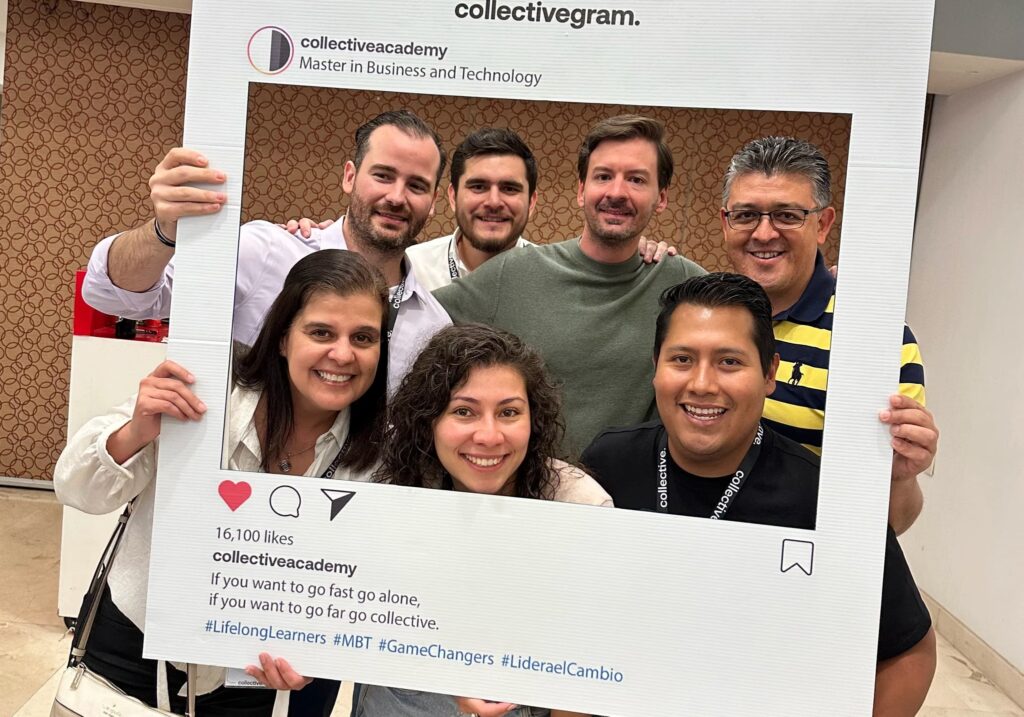
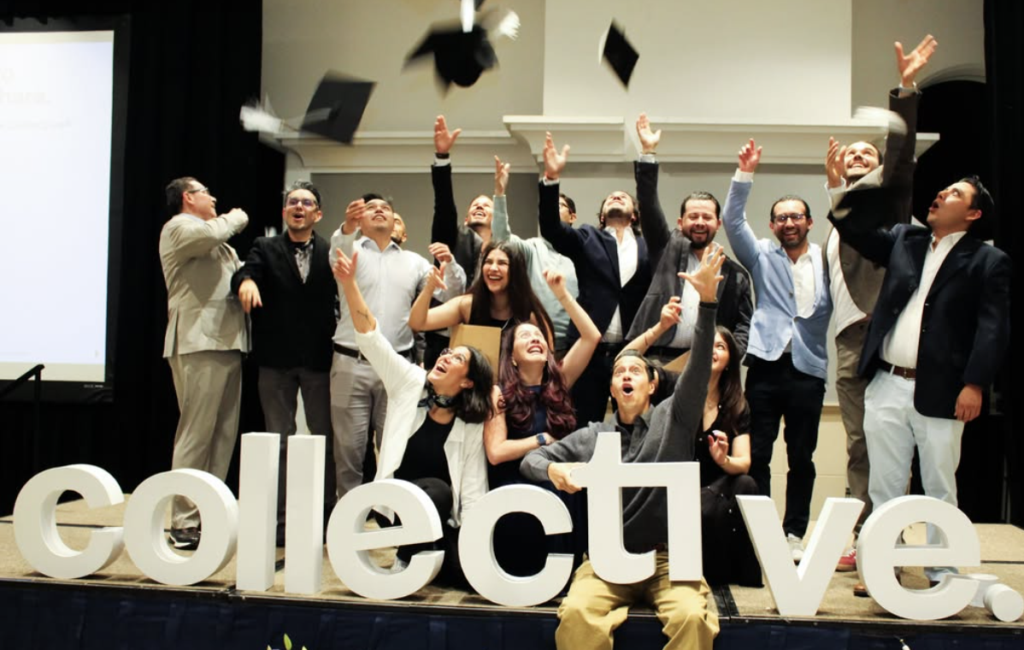
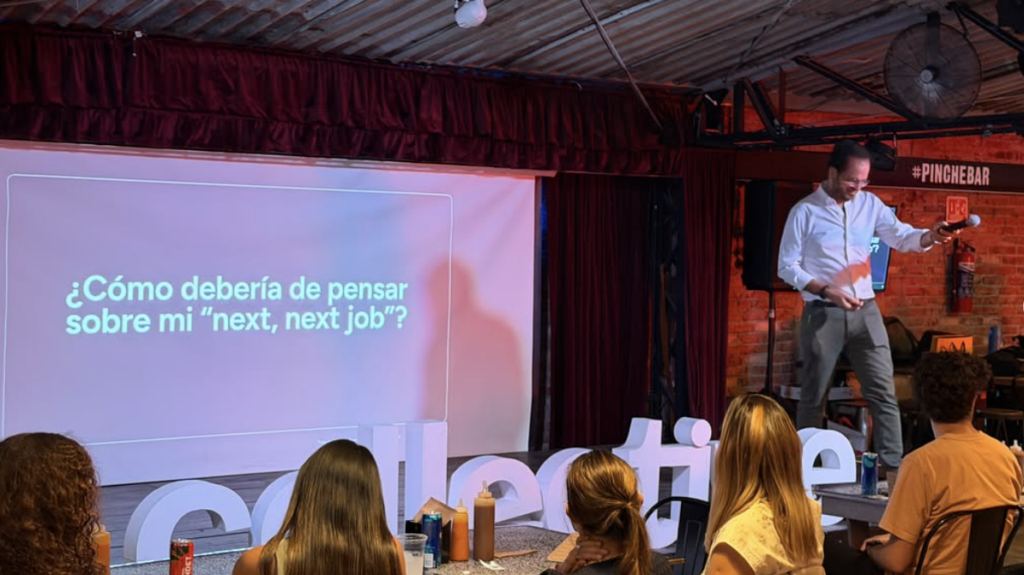
Collective Academy is a consulting firm focused on talent transformation and leadership development. Its work sits right in the middle of what many companies are facing now: teams that need to adapt faster, leaders who need to think differently, and organizations trying to understand what digital change and artificial intelligence really mean in daily work. Not the polished conference version with blue lights and a nice quote on a screen. The real version. Meetings, pressure, change, hard decisions, and someone asking whether the new tool is going to shake up half the team before lunch. The company was founded 11 years ago by Pato Bichara with a clear belief: companies do not really change just because someone says “transformation” in a meeting and everyone nods seriously. They change when leaders change how they think, decide, and execute. That belief has shaped Collective Academy’s work with some of the most important multinational companies in Mexico and Latin America, through learning programs focused on leadership, effective communication, adaptation to change, and organizational development. This is not training made to fill a calendar. It is learning meant to be used in real life, where problems do not arrive with a manual.
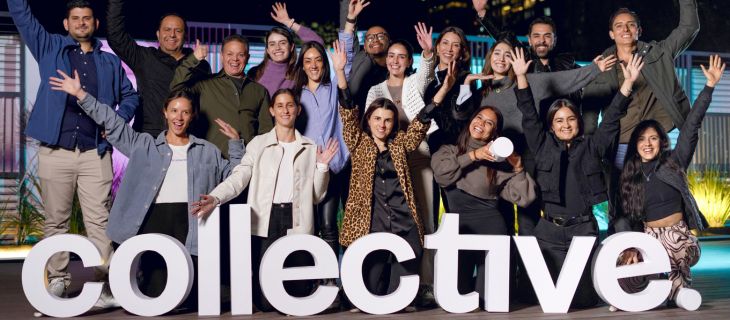
Through practical, flexible, and results focused programs, Collective Academy helps organizations build the skills leaders need in a workplace shaped by technology and artificial intelligence. Its approach combines hands on methodology, continuous learning, and a clear focus on impact. The idea is not only to train talent. The idea is to help companies change the way they operate, communicate, and lead. Because taking a course and changing nothing after it is like buying new running shoes and saying the workout is done. Nice shoes. Still no workout. Today, Collective Academy has a team of around 30 people, mainly between Mexico City and Monterrey, working under a hybrid model. It also works with a network of more than 100 specialized consultants who join different client projects and programs across the region. That model gives the company flexibility and reach, but it also requires a very clear internal operation. When the core team, consultants, clients, sessions, deliverables, and projects are all moving at the same time, information cannot be floating around like paper in front of a fan.
What challenges were they facing with payroll and Human Resources?
Before Runa, Collective Academy managed different Human Resources and personnel administration processes separately. Payroll was in one place. Vacation was somewhere else. Organizational charts had their own tool too. Nothing was exploding with smoke and alarms, but the work was scattered. And scattered work has a habit of getting heavier over time. Someone checks one tool. Someone else updates another. Then someone has to confirm that everything still matches. That is how minutes disappear. Then hours. Then someone asks where the latest version is, and the soul leaves the body for a second. The company already had solid internal processes, but as the team grew, the need to centralize information in one platform became much clearer. Keeping processes fragmented meant spending more time on administrative work and making it harder to see the full picture of the team and the operation. For a consulting firm, that matters. The team needs clarity to move quickly, serve clients, coordinate programs, and make decisions without chasing data like lost socks in a laundry room.
“Having separate processes made it more complex to maintain visibility and coordination over critical team information.”
In an organization where efficiency and clarity are part of the daily work, scattered systems started creating unnecessary operational friction. Not huge friction every day, but the small kind that adds up. One request here. One validation there. A vacation question. An org chart update.
How did Runa help them?
Runa helped Collective Academy bring key Human Resources processes into one place. That was the main change. Payroll, vacation, and organizational structure stopped feeling like separate pieces and started living inside the same platform. The daily operation became simpler, clearer, and easier to manage. It was not magic with lights and smoke. It was something better: order. “We like having all resources in one place,” shares Kristin Barrett. That centralization helped them optimize administrative tasks, improve visibility, and operate with more order and efficiency. For a team used to modern technology and agile processes, this made a lot of sense. If Collective helps other companies transform, its own internal operation also needs to feel modern, clear, and easy to use. Nobody wants to teach agility while looking for information across five different tabs like it is an escape room.
By bringing payroll, vacation, and organizational structure into one platform, the team reduced operational complexity and gained more room to focus on strategic initiatives related to culture, leadership, and organizational growth. That time matters. In a team of 30 people, every hour counts. Less time checking separate tools means more time thinking about the business, clients, team experience, and how to keep growing without adding more administrative noise. Runa’s ease of use also helped adoption feel quick and natural. The team did not have to fight with a heavy tool or go through a never ending learning curve. “The experience is very intuitive and that makes daily work much easier,” adds Kristin Barrett. In practice, that changes a lot. A platform can have many features, but if people cannot use it easily, it becomes expensive decoration. Runa worked because it solved without getting in the way.
Why did they choose Runa?
One of the most important reasons for choosing Runa was the user experience and the modern feel of the platform. Collective Academy needed an intuitive, efficient tool aligned with the way the team already works internally. They were not looking for a platform that looked powerful in a demo and then made everyone need a map, a compass, and a snack just to find a vacation request.
“Runa has a modern interface and is easy and intuitive to use,” says Kristin Barrett. That simplicity was key for implementation and helped the team manage critical processes without unnecessary complexity. Payroll, vacation, and people information are too important to be managed through tools that create more questions than answers. Technology needed to help, not become another internal project. In a company where people experience and operational efficiency carry real weight, having technology that is clear, accessible, and easy to navigate was a priority. Runa helped centralize information, reduce friction, and strengthen internal organization. That freed up time for higher impact initiatives, which is where Collective Academy really wants to put its energy: leadership, culture, learning, and transformation. The basics needed to work well so the strategic work could move better.
What would they tell other companies about Runa?
Collective Academy’s recommendation is clear: Runa is a professional platform for managing critical processes inside any organization. It does not only automate administrative tasks. It also helps build a more organized, more efficient operation that is better prepared to grow. And that becomes very noticeable when a company starts leaving behind separate processes that used to work, but now feel like a drawer full of cables. For teams looking to centralize information, reduce complexity, and professionalize Human Resources management, Runa is a modern and reliable solution. The platform helps make processes clearer, information more visible, and the team less dependent on chasing answers that should already be easy to find. It sounds simple, but simple done well is often what teams appreciate most in daily operations.
“It is a professional platform to manage critical aspects of your company,” says Kristin Barrett. That makes the value pretty clear. Runa does not only improve administration. It supports a more mature way of operating. And for a company focused on leadership and transformation, that connects directly with how they understand work: culture is also built through the small processes people use every day.
Where will Collective Academy be in 10 years?
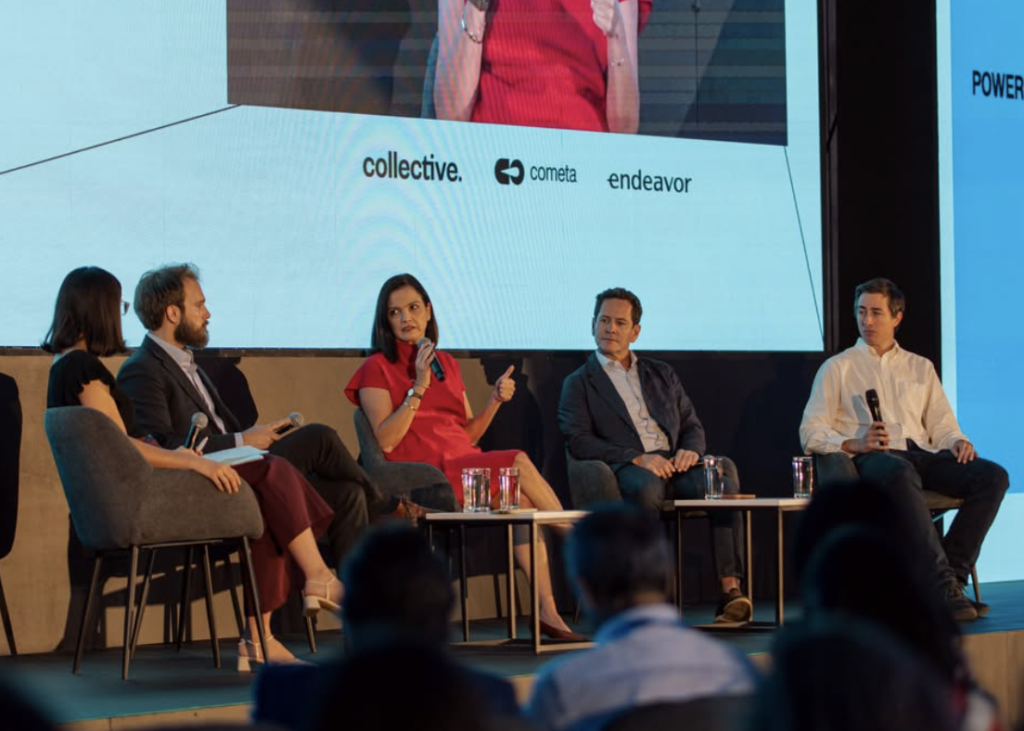
Collective Academy’s vision is to become the main reference in Latin America for organizations going through deep transformation. The team has a question that constantly guides its growth: “How many organizations will be genuinely different and better because they worked with Collective?” That question says a lot. They are not only trying to deliver training programs or traditional consulting. They want to leave a real mark on how companies think, lead, and change. Over the next few years, the company wants to keep expanding its influence across the region, helping organizations build more adaptable cultures, more prepared leaders, and teams that can evolve with the technological and human changes shaping the future of work. That future is not arriving slowly. It is already here, moving everything around, asking uncomfortable questions, and forcing companies to decide whether they adapt or stay watching from the sidewalk.
For Collective Academy, growth also means continuing to practice internally what they teach externally. Better systems. Clearer processes. More useful tools. A team that keeps learning and improving. Runa fits into that path because it helps the company operate with more order and less friction. When the basics are clear, the team has more energy for what really matters: helping leaders and organizations transform in a way that actually lasts.