 US-EN
 Argentina (AR)
 Brazil (BR)
 Chile (CL)
 Colombia (CO)
 Ecuador (EC)
 Mexico (MX)
 Peru (PE)
 Venezuela (VE)

















Workplace collaboration helps organizations coordinate employees, departments, and resources to achieve shared business goals. For HR leaders and business owners, effective collaboration can reduce operational bottlenecks, strengthen workplace culture, and improve how teams execute projects. Understanding its key elements, challenges, and measurement methods helps companies build more coordinated and accountable teams.
What is collaboration in the workplace?
Workplace collaboration is the process of two or more people working together toward a shared goal by combining their knowledge, skills, resources, and responsibilities. It requires coordinated effort, clear expectations, and accountability for achieving a common outcome.
Collaboration can happen within a single team, across departments, between leadership levels, or with external business partners.
Although related, collaboration, communication, and teamwork are not identical:
| Concept | Main characteristic |
| Collaboration | People combine expertise and coordinate responsibilities to achieve shared outcomes. |
| Communication | People exchange information, instructions, or feedback. |
| Teamwork | Members of a team contribute toward common objectives through coordinated individual and collective efforts. |
For example, when HR, IT, and Finance coordinate employee onboarding, each department handles different responsibilities while contributing to the same objective: preparing a new hire to work effectively.
Collaboration goes beyond exchanging information or attending meetings. It requires participants to understand how their contributions affect the final result.
How does effective workplace collaboration work?
Effective workplace collaboration works by aligning employees around common objectives, assigning responsibilities, sharing relevant information, and coordinating decisions. Teams must understand both their individual contributions and how their work depends on others.
Five elements support this process:
| Element | How it supports collaboration |
| Shared goals | Aligns employees around specific outcomes and measurable expectations. |
| Clear responsibilities | Defines task ownership, approval authority, and accountability. |
| Open communication | Allows employees to share updates, concerns, and relevant information. |
| Trust and psychological safety | Encourages participation, constructive feedback, and early identification of problems. |
| Decision-making processes | Establishes who makes decisions, when input is needed, and how issues are escalated. |
Leadership support reinforces these elements by establishing expectations and addressing barriers between teams.
Example: During a new employee onboarding process, HR coordinates documentation, IT prepares system access, Finance confirms payroll information, and the hiring manager organizes training. Each function completes its responsibilities according to an agreed timeline.
Collaboration is effective when these contributions result in a completed onboarding process, rather than merely generating frequent communication between departments.
What are the different types of workplace collaboration?
Organizations use different types of collaboration depending on their structure, business objectives, workforce distribution, and the people involved.
The five common types are:
| Type | Description | Workplace example |
| Team collaboration | Employees within the same department or project group coordinate their work. | HR specialists developing an employee engagement initiative. |
| Cross-functional collaboration | Employees from different departments combine expertise. | HR, Finance, and Legal reviewing compensation policies. |
| Strategic collaboration | Executives and business leaders align decisions, priorities, and resources. | Leadership teams developing an annual workforce plan. |
| Digital collaboration | Employees coordinate work through digital platforms, regardless of location. | Remote teams managing projects through shared documents and messaging systems. |
| External collaboration | Organizations work with outside stakeholders to achieve business objectives. | HR coordinating with a payroll provider or independent contractor. |
These categories can overlap. For example, a cross-functional project involving employees in several states may also require digital collaboration.
The appropriate approach depends on the complexity of the work, the number of stakeholders, and the level of coordination required.
Why is collaboration important in the workplace?
Workplace collaboration is important because it helps organizations combine expertise, coordinate responsibilities, and execute business priorities more effectively. It can also improve employee experiences by creating stronger connections between teams and reducing unnecessary operational friction.
Its main potential benefits include:
- Greater operational efficiency: Coordinated workflows can reduce duplicated tasks, unnecessary approvals, and rework.
- Better decision-making: Input from different departments helps leaders evaluate operational, financial, and workforce implications.
- Stronger problem-solving: Employees with different expertise can identify risks and develop solutions that might be overlooked individually.
- More opportunities for innovation: Sharing knowledge and perspectives can support improvements to processes, products, and services.
- Improved employee engagement: Participation in shared goals can strengthen employees' sense of contribution and accountability.
- Better workforce stability: Supportive working relationships may contribute to employee satisfaction and help address factors associated with voluntary attrition.
These outcomes are not automatic. Poorly structured collaboration can produce excessive meetings, unclear accountability, and slower decisions.
For business leaders, the objective is not to maximize collaboration activity. It is to ensure that collaboration produces measurable improvements in how work gets completed.
What role does HR play in workplace collaboration?
Human resources supports workplace collaboration by establishing people-management practices, organizational structures, and leadership expectations that encourage employees to work effectively across teams. Although collaboration is a shared organizational responsibility, HR helps create the conditions that make it sustainable.
Its responsibilities may include:
- Organizational design: Helping leaders define reporting relationships, team structures, responsibilities, and coordination mechanisms.
- Recruitment and onboarding: Evaluating relevant interpersonal skills and helping new employees understand how their roles connect with other departments.
- Leadership development: Training managers in communication, conflict resolution, inclusive decision-making, and constructive feedback.
- Performance management: Incorporating relevant collaborative behaviors into performance evaluations and incentives without undermining individual accountability.
- Employee experience: Using engagement surveys, manager feedback, and employee-relations information to identify collaboration barriers.
- Cross-functional coordination: Working with IT, Finance, Legal, and Operations to align policies, workforce processes, and technology.
HR should also recognize when collaboration demands become excessive. Constant interruptions, unclear responsibilities, and meeting overload may contribute to employee stress or burnout.
The objective is to support productive collaboration while allowing employees sufficient time for focused individual work.
How can organizations improve collaboration at work?
Organizations can improve workplace collaboration by defining shared goals, clarifying responsibilities, simplifying communication, and reinforcing accountability. Improvements should target specific workflow problems instead of simply increasing the number of meetings or collaboration tools.
A practical approach involves six steps:
- Identify collaboration barriers. Review missed deadlines, duplicated tasks, employee feedback, and recurring handoff problems to understand where coordination fails.
- Define shared objectives. Establish the expected result, relevant deadlines, success criteria, and departments involved in each initiative.
- Assign responsibilities and decision rights. Identify task owners, required contributors, final decision-makers, and escalation procedures. A RACI matrix can help clarify complex responsibilities.
- Establish communication standards. Determine which information requires a meeting, what can be communicated asynchronously, and where decisions must be documented.
- Develop collaborative leadership skills. Train managers to facilitate discussions, resolve disagreements, encourage employee participation, and maintain accountability.
- Evaluate results and adjust processes. Monitor project outcomes, gather employee feedback, and revise practices that create unnecessary coordination or delays.
Example: If onboarding delays frequently result from incomplete handoffs between HR and IT, the company can introduce a shared checklist with assigned owners, deadlines, and status updates.
This approach addresses a specific operational problem without requiring additional meetings.
Which tools support workplace collaboration?
Workplace collaboration tools are digital platforms that help employees communicate, share information, manage responsibilities, and coordinate tasks. The appropriate technology depends on the organization's work processes, team structure, and information-security requirements.
Common categories include:
| Tool category | Primary purpose |
| Messaging platforms | Enable quick communication and coordination between employees. |
| Project management software | Track tasks, deadlines, responsibilities, and project progress. |
| Shared document platforms | Allow teams to access, edit, and maintain shared information. |
| Video conferencing tools | Support real-time discussions, meetings, and remote collaboration. |
| Workflow automation systems | Coordinate approvals, notifications, and recurring processes. |
| Human Resource Information Systems (HRIS) | Centralize employee information and support HR-related workflows. |
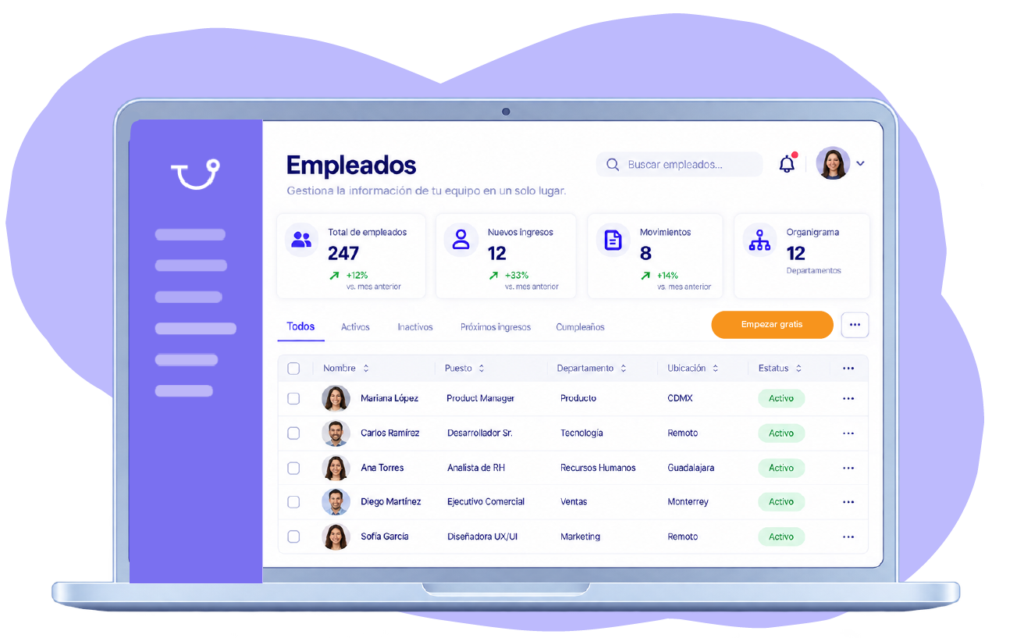
An HRIS can support collaboration between HR, managers, employees, and other departments through employee records, onboarding processes, leave approvals, and internal communications.
Before adopting a platform, organizations should assess integration capabilities, access permissions, data protection, ease of use, and employee adoption.
Technology cannot replace clear responsibilities or effective management. Collaboration tools provide the infrastructure, but people and processes determine whether coordination produces useful outcomes.
How can organizations measure the effectiveness of collaboration?
Organizations can measure collaboration effectiveness by evaluating business outcomes, workflow efficiency, and employee experiences rather than counting meetings or messages. Effective measurement combines operational metrics with qualitative feedback.
The following indicators can help identify whether collaborative practices are delivering results:
| Indicator | What to measure | What it can reveal |
| Project completion | Percentage of projects completed on schedule | Whether teams coordinate responsibilities and deadlines effectively. |
| Workflow efficiency | Task completion times, approval delays, and handoff duration | Where coordination problems slow execution. |
| Rework and errors | Frequency of duplicated tasks, corrections, or missed requirements | Whether teams share accurate information and clarify expectations. |
| Employee feedback | Survey responses about communication, trust, and cross-team support | How employees experience collaboration. |
| Decision-making efficiency | Time required to resolve issues and obtain approvals | Whether decision rights and escalation processes are clear. |
| Business outcomes | Quality, customer satisfaction, or other project-specific KPIs | Whether coordinated efforts support broader organizational objectives. |
No single metric proves that collaboration is effective. For example, a faster project completion time may result from several factors unrelated to teamwork.
HR and business leaders should compare results against an established baseline, review trends over time, and investigate differences between teams.
Employee surveys and manager discussions can provide additional context, particularly when operational metrics suggest bottlenecks but do not explain their causes.
The goal is to determine whether collaboration contributes to better decisions, more reliable execution, and a healthier working environment.
What should leaders prioritize to build a collaborative workplace?
Building a collaborative workplace requires consistent leadership, clear accountability, and coordination practices aligned with business objectives.
Leaders should prioritize collaboration where employees or departments depend on one another to achieve an outcome. Clear decision rights, well-defined processes, appropriate technology, and continuous employee feedback help make these interactions more effective.
HR can reinforce these practices through organizational design, manager development, and performance management, while operational leaders remain responsible for execution.
Successful collaboration is not about involving more people in every decision. It is about bringing the right people together, at the right time, with clear responsibilities and a shared objective.
Frequently asked questions
How do HR and payroll teams collaborate on Form W-4?
How does collaboration improve 401(k) plan administration?
Effective collaboration between HR, payroll, finance, and benefits providers supports accurate 401(k) contributions, enrollment management, and employee communications. Coordinating these responsibilities helps reduce administrative errors and maintain consistent retirement plan records.
Why is Form W-9 important when working with contractors?
W-9 allows businesses to collect taxpayer identification information needed for certain tax reporting obligations. Finance, legal, and operations teams can collaborate to maintain accurate contractor records, verify documentation, and support compliant payment reporting.
How does form 1099 require cross-functional collaboration?
Preparing a 1099 form may require coordination between finance, payroll, and compliance teams to verify reportable payments, taxpayer information, and filing requirements. HR or legal teams may also help assess worker classification when independent contractors are involved.
How does EFTPS support coordination between departments?
The Electronic Federal Tax Payment System (EFTPS) allows businesses to submit federal tax payments electronically. Payroll and finance teams coordinate payment amounts, deadlines, and records, while compliance personnel may oversee tax obligations and reporting accuracy.
Why is a FEIN important for business operations?
A Federal Employer Identification Number (FEIN) identifies a business for federal tax purposes. HR, payroll, and finance teams use this identifier for employment tax filings, wage reporting, and other administrative processes that require consistent employer information.
How does FUTA compliance involve different departments?
Federal Unemployment Tax Act (FUTA) compliance requires accurate wage records and employer unemployment tax reporting. Payroll calculates taxable wages and applicable taxes, finance manages payments, and HR maintains employment information that supports accurate reporting.